Lesson content
Read, practise, then check your understanding
A sprint is a fixed Scrum timebox guided by one sprint goal. Planning combines priority, readiness, capacity, dependencies, and evidence from previous delivery. Assignment should reflect collaboration, not lock every item to one person prematurely.
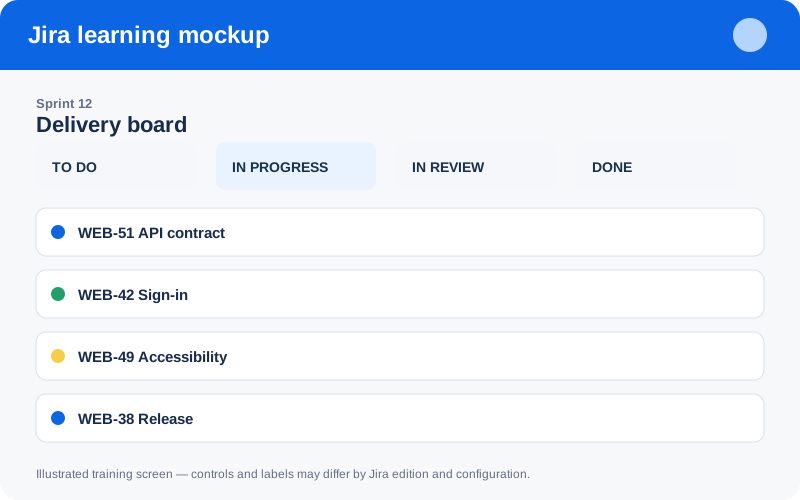
Illustrated training screen. Jira labels and controls can differ between Cloud, Data Center, company-managed, and team-managed projects.
Step-by-step
- Review the product goal, top backlog items, and recent velocity as evidence.
- Calculate realistic capacity after leave, support, and ceremonies.
- Write one outcome-focused sprint goal.
- Select ready items that support the goal and fit capacity.
- Break down near-term execution, confirm ownership, then start the sprint with correct dates.
Worked example
Example goal: “Customers can recover access without support.” Prefer it over “Complete 42 points.” If scope changes, protect the goal and make trade-offs visible.
Practice task
Recreate the example in a sandbox project, record what you changed, and explain which team decision the configuration supports. Never experiment with production permissions, workflows, or automation without an approved change plan.
Knowledge check
Answer every question correctly to complete this chapter.
0 of 10 checks passed
Your progress is saved on this device.