Lesson content
Read, practise, then check your understanding
Jira historically calls tracked records issues; current interfaces may say work items. A story describes user value, a task represents general work, a bug captures incorrect behavior, an epic groups a large outcome, and a subtask splits execution under one parent.
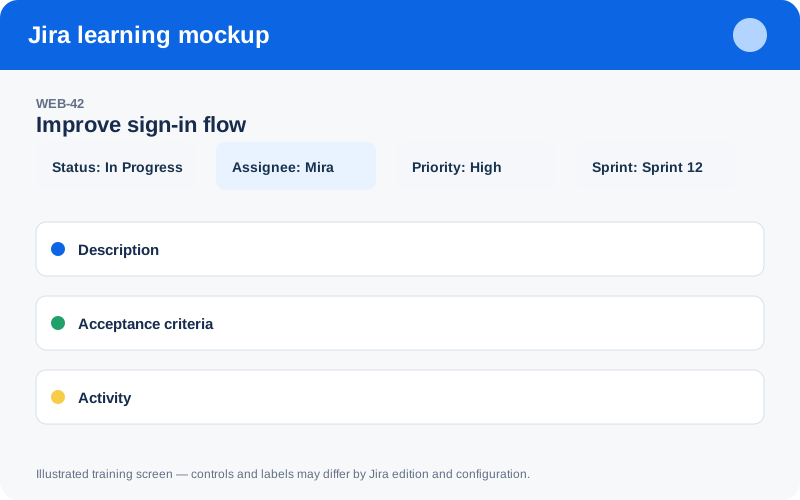
Illustrated training screen. Jira labels and controls can differ between Cloud, Data Center, company-managed, and team-managed projects.
Step-by-step
- Choose the work type from meaning, not from who requested it.
- Write a specific summary using an action and outcome.
- Add context, acceptance criteria, priority evidence, and relevant links.
- Assign an owner only when responsibility is accepted.
- Split oversized items; use subtasks for execution steps that need the parent's context.
Worked example
Example story: “As a returning customer, I can reset my password so that I regain account access.” Acceptance criteria should describe observable results, including invalid and expired links.
Practice task
Recreate the example in a sandbox project, record what you changed, and explain which team decision the configuration supports. Never experiment with production permissions, workflows, or automation without an approved change plan.
Knowledge check
Answer every question correctly to complete this chapter.
0 of 10 checks passed
Your progress is saved on this device.