Cloud Computing
Cloud Cost Optimization for Engineering Teams
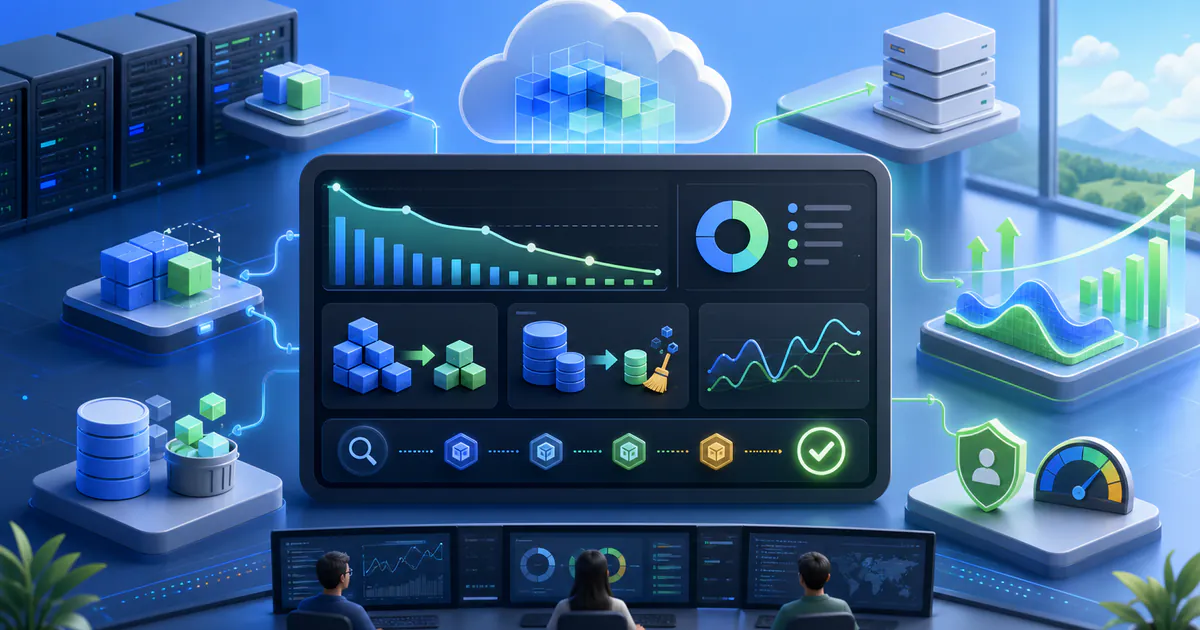
Cloud cost optimization is now an engineering responsibility, not only a finance task. As teams adopt serverless, containers, managed databases, observability tools, AI services, and global storage, cloud bills can grow quietly. The solution is not to stop using the cloud. The solution is to understand usage, remove waste, and design systems with cost in mind.
FinOps gives teams a practical mindset: make cost visible, connect spend to product value, and improve decisions continuously. Developers do not need to obsess over every cent, but they should know which choices create recurring cost.
Make Cost Visible
Teams cannot optimize what they cannot see. Start with tagging, dashboards, and ownership. Every production service should have a team, environment, and product area attached to it.
Track:
- Monthly spend by service.
- Cost per environment.
- Cost per customer or transaction.
- Unused resources.
- Data transfer charges.
- Observability and log volume.
Cost dashboards should be part of engineering review, just like uptime and performance.
Right-Size Compute
Over-provisioned compute is one of the most common sources of waste. Instances, containers, and database tiers are often sized for fear rather than measured demand.
Good right-sizing practices include:
- Review CPU and memory utilization.
- Use autoscaling where traffic changes.
- Move bursty workloads to serverless or queues.
- Schedule non-production environments to shut down.
- Use smaller instances for staging and development.
The goal is not to run everything as small as possible. The goal is to match capacity to real demand.
Tune Serverless Costs
Serverless can be cost-effective, but only when functions are designed well. Long execution times, excessive retries, heavy dependencies, and chatty API calls can increase spend.
export async function handler(event) {
  const records = event.records.slice(0, 100);
  await processBatch(records);
}
Batch where possible, cache repeated reads, and monitor execution time. Set alerts for unusual invocation spikes.
Clean Up Storage
Storage costs grow because data is easy to create and hard to delete. Logs, backups, object storage, snapshots, and analytics exports should all have lifecycle policies.
Review:
- Old database snapshots.
- Unused object storage buckets.
- Large logs with no retention policy.
- Build artifacts.
- Duplicate backups.
- Abandoned development datasets.
Lifecycle rules are often the fastest cloud cost win.
Watch Data Transfer
Data transfer can surprise teams, especially with multi-region apps, media-heavy products, and analytics pipelines. Use CDNs for public assets, compress responses, and avoid unnecessary cross-region traffic.
Good architecture keeps frequent data movement close to the services that need it.
Build Cost Reviews Into Delivery
Cost optimization should not happen only after a bill becomes painful. Add lightweight cost review to normal engineering rituals. When a pull request adds a new queue, database, storage bucket, AI endpoint, or observability stream, ask how it will scale and who owns it.
Simple review questions help:
- Does this service need to run all day?
- Can this data expire automatically?
- What metric will show abnormal usage?
- Is there a cheaper managed option?
- Can staging use smaller limits than production?
This habit keeps cloud spend visible while architecture decisions are still easy to change. Visibility creates accountability.
Related Reading
- Serverless Computing Trends for Cloud Apps
- DevOps Automation Tools for Modern Delivery
- Future of Full-Stack Development in 2026
Final Thoughts
Cloud cost optimization is strongest when it becomes part of normal engineering hygiene. Tag resources, monitor usage, right-size compute, clean up storage, and design with cost awareness. Small improvements across many services often produce the biggest savings.
Keep reading
Related blogs

Cloud Computing
Serverless Computing Trends for Cloud Apps
Explore serverless computing trends for modern apps, including edge functions, event-driven workflows, AI workloads, APIs, and cloud-native scaling in 2026.
Read related article
Software Engineering
Future of Full-Stack Development in 2026
Explore the future of full-stack development with AI copilots, serverless, edge apps, type-safe APIs, cloud platforms, automation, and product teams in 2026.
Read related article
DevOps
DevOps Automation Tools for Modern Delivery
Compare DevOps automation tools for CI/CD, IaC, observability, containers, security checks, release governance, and reliable delivery pipelines in 2026.
Read related article
Database
MongoDB Performance Tuning for Modern Apps
Tune MongoDB performance with indexes, schema design, query profiling, aggregation optimization, caching, and production database monitoring for apps.
Read related article
Web Development
AI in Next.js Development for Modern React Apps
Learn how AI in Next.js development improves React apps with server components, edge functions, automation, smarter UX, and full-stack delivery in 2026.
Read related article