DevOps
DevOps Automation Tools for Modern Delivery
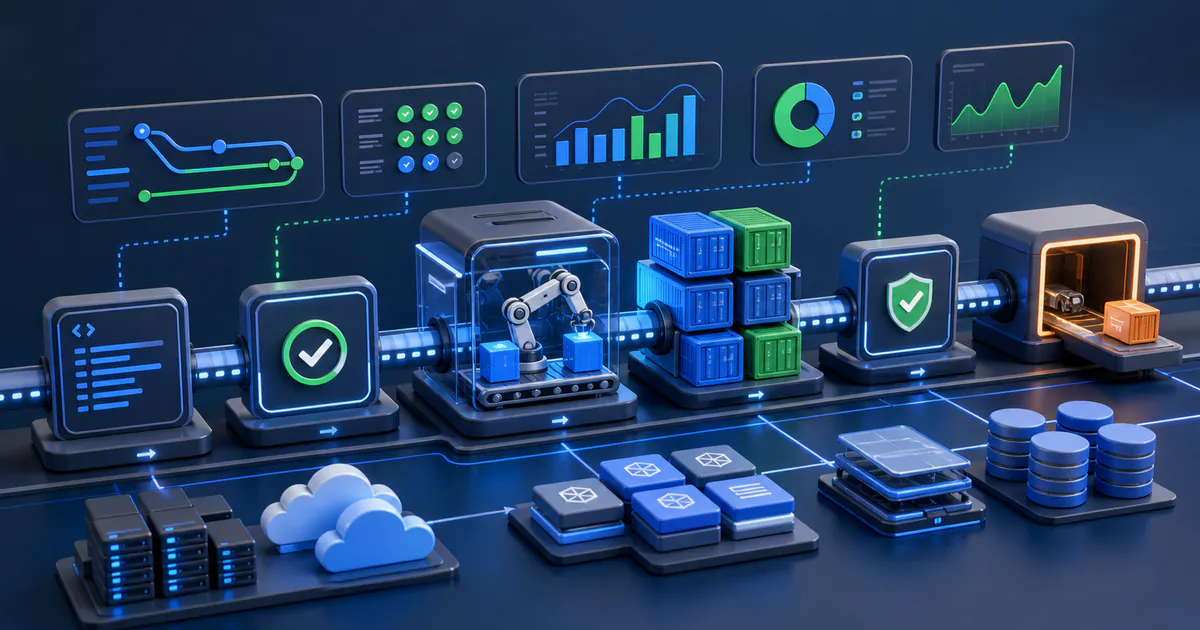
DevOps automation tools help teams move from manual release work to repeatable software delivery. The best tooling does not simply make deployments faster. It makes them safer, easier to audit, and easier to recover when something goes wrong. In 2026, DevOps automation covers CI/CD, infrastructure as code, security checks, containers, observability, and release governance.
The right toolchain depends on the team, product, cloud provider, compliance needs, and engineering maturity. A startup may need simple preview deployments and automated tests. An enterprise may need policy controls, approval workflows, environment isolation, and detailed audit logs.
CI/CD Tools
Continuous integration and continuous delivery are the foundation of DevOps automation. Popular options include GitHub Actions, GitLab CI, CircleCI, Jenkins, Azure Pipelines, and Buildkite.
A healthy pipeline usually includes:
- Dependency installation and caching.
- Linting and formatting checks.
- Unit and integration tests.
- Security scanning.
- Build artifacts.
- Deployment to staging or production.
name: quality-check
on: [pull_request]
jobs:
  test:
    runs-on: ubuntu-latest
    steps:
      - uses: actions/checkout@v4
      - run: npm ci
      - run: npm run lint
      - run: npm test
The goal is quick feedback. Developers should know within minutes whether a change is safe to continue.
Infrastructure as Code
Infrastructure as code, or IaC, turns cloud resources into reviewed, versioned configuration. Terraform, OpenTofu, Pulumi, AWS CDK, and CloudFormation are common choices.
IaC helps teams:
- Recreate environments consistently.
- Review infrastructure changes through pull requests.
- Reduce manual cloud console edits.
- Track drift between desired and real infrastructure.
- Roll back risky changes more confidently.
For small teams, IaC may feel slower at first. Over time, it prevents hidden production differences that create painful incidents.
Containers and Orchestration
Docker remains a common packaging standard. Kubernetes is powerful for large systems, but it is not always necessary. Many teams get excellent results from managed container platforms, serverless containers, or platform-as-a-service deployments.
Choose Kubernetes when you need:
- Complex service orchestration.
- Custom networking or scheduling.
- Multi-service platform control.
- Strong portability requirements.
Choose simpler managed platforms when the product needs speed more than infrastructure customization.
Observability Automation
Automation is incomplete without visibility. Logs, metrics, traces, uptime checks, and error tracking should be configured as part of delivery.
Useful tools include Datadog, Grafana, Prometheus, OpenTelemetry, Sentry, New Relic, and cloud-native monitoring services.
Track:
- Deployment frequency.
- Lead time for changes.
- Failed deployment rate.
- Recovery time.
- API latency and error rate.
These metrics connect DevOps work to product reliability.
Security in the Pipeline
DevOps automation should include security scanning without blocking developers unnecessarily. Add dependency checks, secret scanning, container scanning, and static analysis where they provide clear signal.
Security gates should be:
- Fast enough for pull requests.
- Clear about severity.
- Actionable for developers.
- Tuned to reduce noisy failures.
Release Governance
As teams grow, release governance becomes part of automation. That does not mean slowing every deployment with meetings. It means defining which changes can ship automatically and which need approval.
Useful controls include:
- Protected production environments.
- Required checks for database migrations.
- Approval rules for high-risk services.
- Feature flags for gradual rollout.
- Automatic rollback when health checks fail.
Good governance makes releases boring in the best possible way.
Related Reading
- Cybersecurity for Developers Secure Coding Guide
- Cloud Cost Optimization for Engineering Teams
- Benefits of JavaScript for Modern Web Development
Final Thoughts
DevOps automation tools are most valuable when they remove uncertainty. Build a pipeline that tests, secures, deploys, observes, and documents the path to production. The perfect tool matters less than a workflow your team can trust every day.
Keep reading
Related blogs
Cloud Computing
Serverless Computing Trends for Cloud Apps
Explore serverless computing trends for modern apps, including edge functions, event-driven workflows, AI workloads, APIs, and cloud-native scaling in 2026.
Read related article
Cloud Computing
Cloud Cost Optimization for Engineering Teams
Reduce cloud costs with FinOps, autoscaling, storage cleanup, serverless tuning, observability, right-sizing, and smarter architecture decisions in 2026.
Read related article
AI and Machine Learning
Generative AI Architecture for Production Apps
Build production generative AI apps with secure LLM gateways, prompt management, observability, evaluation, caching, and scalable deployment patterns.
Read related article
Web Development
AI in Next.js Development for Modern React Apps
Learn how AI in Next.js development improves React apps with server components, edge functions, automation, smarter UX, and full-stack delivery in 2026.
Read related article
AI and Machine Learning
Building Production-Ready RAG Pipelines in 2026
Build production-ready RAG pipelines with reliable ingestion, hybrid retrieval, reranking, grounded generation, evaluation, security, and monitoring now.
Read related article